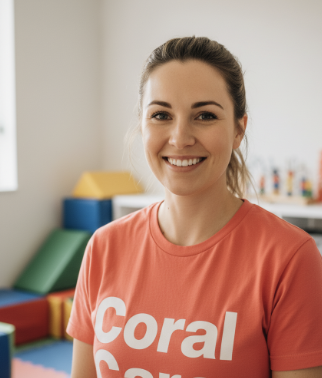

Barb Crowley spent 25 years as a school-based occupational therapist. Three states. Hundreds of kids. A career that by any measure was working.
And then she switched to in-home therapy and realized she'd been missing half the picture.
That's not a knock on school-based OT. It's just what happens when you spend 25 years in one setting and then walk into a family's home for the first time.
The team looks completely different
In a school district, your team is other professionals. Teachers, diagnosticians, speech therapists, physical therapists, the IEP coordinator. Parents are on the team in theory, but in practice, Barb describes her contact with them as minimal. You had five minutes, maybe, at a meeting. Enough to update them, not enough to really work together.
In the home, the parent is the team. They're the ones in the room. They're the ones who will carry the work forward after you leave. They're the most motivated people involved.
For Barb, that shift was the biggest adjustment — and the biggest reward. "Working with the parents in their homes, you can see how the home environment impacts the child," she told us. "I feel like I'm making more of a difference than I was in the school setting."
You see the whole child
In a school, you see a child performing in a structured environment built for learning. It tells you a lot. But it doesn't tell you that the sensory issues spike at home because of a specific texture in their bedroom, or that the dysregulation before school happens at breakfast, or that the child who can't sit still in class is actually fine the moment they get outside.
In the home, you see the full context. Where they do homework. How the kitchen is set up. What the morning routine actually looks like. That context changes what you do clinically. It changes what advice you give parents. And it changes the kinds of goals that actually matter.
You have to stay sharp
A caseload of 70 kids in a district creates a kind of groove. You get good at what you do most. But Barb found that moving to in-home therapy forced her back to the research in ways she hadn't expected.
"I've had to hit the books again," she told us. "There's new research, new modalities. Being with Coral Care, I've had more flexibility in my treatment methodology. If I want to bring in a new approach, I can."
She started exploring vibration plates. She followed clinical threads that a packed school schedule would never have let her pursue. When you're not running at full capacity every day just to get through your caseload, you have room to grow.
The parents are different too
Barb made an observation that comes up a lot when we talk to providers who've made the school-to-home transition: parents today know more than they used to.
"Parents have a basic understanding these days, thanks to social media and the internet," she said. "They know it's not just behavior. They know there's an underlying cause. They're coming to us already asking the right questions."
That changes the dynamic of every session. You're not explaining OT from scratch. You're working with a family that is already motivated, already curious, and already invested in understanding what's happening with their child.
What she'd tell a school-based OT today
Barb's advice to anyone considering the transition: give yourself permission to be curious about what's on the other side. The school setting builds real clinical skill. But it also builds constraints — on your schedule, on your methodology, on how much time you actually spend with the families who need you most.
In-home therapy doesn't replace that foundation. It extends it.
Barb made this switch after 25 years. Here's what happened next.
Read her full story — then see what building a practice on your own terms could look like for you.
