
Trick-or-treating is a real-world mobility test: curbs, stairs, uneven sidewalks, low light, and more walking than most kids do on a normal evening. When you see kids where they live, you can practice on the child's actual steps and street.
6 Halloween physical therapy activities
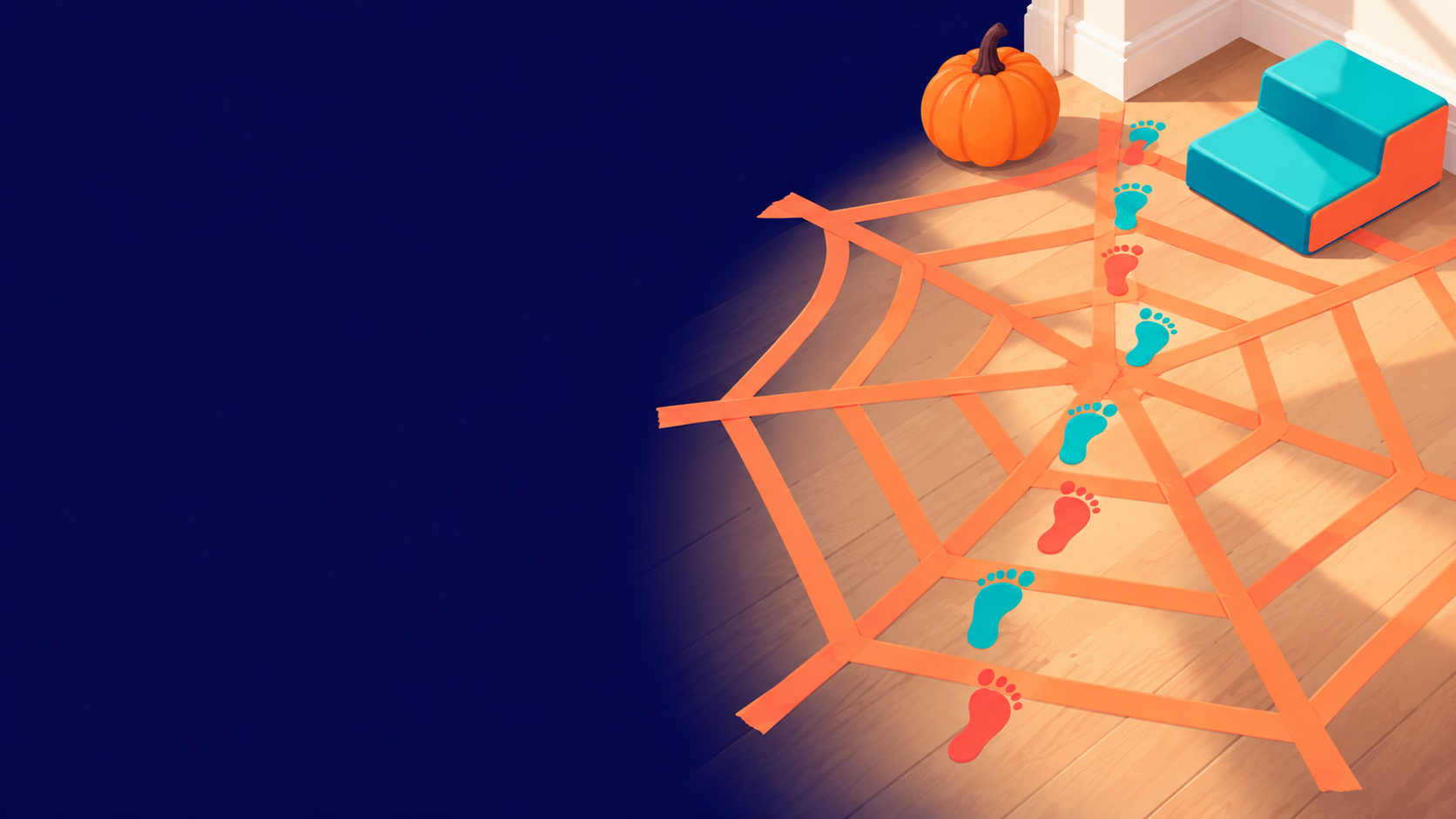
- Painter's tape spider web. Balance walk, side step, or hop along the lines. Targets: dynamic balance, single leg stance.
- Pumpkin carry. Carry a small pumpkin across the room, up stairs, or over pillow obstacles. Targets: functional strength, stair negotiation.
- Monster moves. Stomp, crawl, bat flap, and ghost freeze on command. Targets: motor planning, core strength, following directions.
- Pumpkin bowling. Roll a small pumpkin into water bottle pins from standing or kneeling. Targets: weight shifting, coordination.
- Haunted obstacle course. Couch cushions, a blanket tunnel, and a step stool "porch." Targets: transitions, climbing, endurance.
- Route practice. Walk part of the child's real trick-or-treat route, including curbs and front steps. Targets: community mobility, endurance, device use.
Wheelchair and mobility device costume safety
- Wheelchair costumes attach to the frame only. Keep wheels, push rims, brakes, and footrests clear.
- Don't add width. The chair still needs to fit doorways and curb cuts.
- Walkers, crutches, and gait trainers: keep grips completely clear of tape or fabric.
- Check that the child can still self-propel or use their device independently in costume.
- Add reflective tape or glow sticks, especially on devices low to the ground.
Footwear and orthotics
- Skip costume shoes. Most don't fit over AFOs and offer little support.
- Suggest loose pants or leggings that fit over braces.
- Kids can decorate braces or device covers as part of the costume.
Endurance and trick-or-treat route planning
- Help the family pick a realistic number of houses based on the child's current endurance.
- Map the route for curb cuts, ramps, and fewer front steps.
- Plan rest points and bring a stroller or wagon backup for longer routes.
- Start before dark so the child can see uneven ground.
Making it count
- Document the skill, task, and level of assistance, not the Halloween theme.
- Hand off each activity to the caregiver partway through so they can repeat it.
- Leave a one-line home program: "Walk to the corner and back after school, 3 days this week."
For costume ideas to share with families, send parents our adaptive Halloween costume guide. For packing ideas, see What's in My Therapy Bag: Halloween Edition.
Why PTs choose Coral Care
You get to train mobility on the real steps and sidewalks a child uses every day. Coral Care PTs see kids in person, set their own schedules, and choose the areas they serve. We handle credentialing and billing.
Frequently Asked Questions
No items found.
