
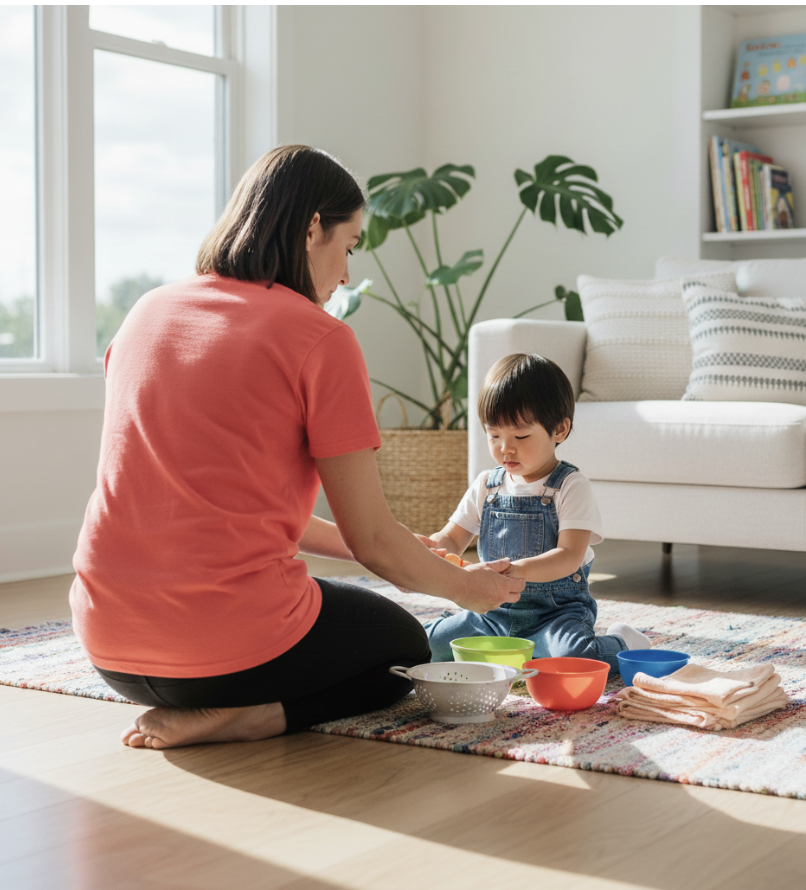
In-home pediatric therapy is one of the fastest-growing service models for occupational therapists, speech-language pathologists, and physical therapists. Families love the convenience and comfort. Clinicians love the flexibility, deep parent collaboration, and ability to make meaningful progress in a child’s natural environment.
Yet for many therapists, the transition from clinic or school settings into home-based care feels unfamiliar. How do you structure sessions? What materials do you bring? How do you manage documentation? How do you build a caseload without driving all over the city?
This guide explains everything pediatric clinicians need to know about in-home therapy: why it works, how to structure sessions, what materials to use, and how to build a sustainable practice with the right support.
What In-Home Pediatric Therapy Is
In-home pediatric therapy delivers OT, SLP, and PT services directly in the environments where children live and learn. Instead of clinic equipment, clinicians use everyday household items to address functional goals.
It is family-centered, natural, and adaptable.
Why Families Prefer In-Home Therapy
Comfort and regulation
Children are more regulated in familiar environments.
Fewer transitions
No packing up, commuting, or waiting rooms for families.
Real parent participation
Parents see strategies in real time and can practice them daily.
Naturalistic interventions
Therapy happens during ordinary routines like mealtime, dressing, bath time, homework, or play.
Better outcomes
Skills practiced in real environments generalize faster and more consistently.
Why Clinicians Choose In-Home Therapy
More flexibility
Clinicians control their schedules and can choose hours that align with their lives.
Higher earning potential
Lower overhead allows more revenue to flow directly to the clinician.
Better clinical insight
Seeing a child in their daily environment reveals strengths and challenges that may be missed in a clinic.
Stronger parent relationships
Working within the home naturally deepens collaboration and trust.
Less burnout
Autonomy, meaningful pacing, and reduced productivity pressures support long-term sustainability.
Evidence-Based Benefits
Research consistently shows that in-home therapy improves skill generalization, increases parent involvement, enhances emotional regulation, and results in stronger long-term outcomes.
The model aligns with the core principles of family-centered care and neurodiversity-informed practice.
What a Typical In-Home Session Looks Like
Arrival and rapport
Greet the family, connect, and observe how the child is doing.
Quick regulation assessment
Check for sensory, emotional, or energy needs.
Review goals with parents
Align on focus areas for the day.
Activity-based intervention
Use household items to work on functional goals.
Parent coaching
Model strategies and explain the purpose behind each activity.
Wrap-up
Summarize progress and outline next steps.
Adapting Activities to the Home
OT examples
Mealtime for fine motor and sensory work
Dressing routines for sequencing
Pillow play for proprioceptive input
Kitchen tasks for executive functioning
SLP examples
Books for receptive and expressive language
Mealtime for articulation practice
Playtime for turn-taking and pragmatic skills
PT examples
Couch cushions for obstacle courses
Stairs for balance and strength
Hallway races for motor planning
Home-based therapy thrives on everyday items families already own.
Safety Considerations
Effective home-based practice includes clear arrival and departure protocols, quick environmental scans, boundaries with pets and siblings, maintaining a charged phone, parking in safe areas, and sharing schedules with a trusted contact.
Coral Care provides clinicians with best practices and support to ensure safe, consistent home visits.
Documentation Tips for In-Home Therapy
Complete notes immediately when possible.
Use structured templates.
Focus on observable behaviors and functional goals.
Document parent coaching.
Track how routines support skill development.
Coral Care’s documentation tools and voice notes help clinicians complete notes quickly and consistently.
How to Start Providing In-Home Pediatric Therapy
Build pediatric experience
Clinic, early intervention, or school backgrounds prepare clinicians well.
Choose age groups and specialties
Clarify your preferred clinical focus.
Define your travel radius
A smaller radius increases caseload density and sustainability.
Build a minimal therapy kit
Most sessions use household items; bring only what you truly need.
Partner with an enablement platform
Coral Care manages credentialing, billing, matching, scheduling, and parent communication so clinicians can focus on care.
How Coral Care Supports Home-Based Clinicians
Local caseload matching
Families are matched based on specialty, skills, and location.
Credentialing and billing
Coral Care manages payer applications, claims, follow-ups, and payment processing.
Scheduling and family support
Clear coordination reduces cancellations.
Documentation workflows
Templates and voice note options support fast, high-quality notes.
Clinical and operational guidance
Independence with the support of a team behind you.
This structure helps clinicians earn more, work flexibly, and reduce burnout.
Common Questions About In-Home Pediatric Therapy
Do in-home therapists earn more?
Yes. Lower overhead and tight caseload geography increase earnings.
Is in-home therapy safe?
With simple, standard procedures and support, it is safe and sustainable.
Do therapists need lots of materials?
No. Most activities use items found in the home.
Is documentation easier?
With the right templates, notes can be finished in minutes.
How fast does a caseload grow?
With Coral Care, many clinicians build caseloads within weeks.
Conclusion
In-home pediatric therapy is flexible, family-centered, and clinically effective. It strengthens parent involvement, reduces clinician burnout, and allows therapists to work with autonomy and intention.
With Coral Care, OTs, SLPs, and PTs can build independent practices without the burden of managing credentialing, billing, marketing, or operations. It is the simplest path toward sustainable, high-impact private practice.
